The Innocent
Keep it simple, keep it good.
Innocent brands promise a simpler, better way. They earn trust by being clear, kind and uncomplicated.
Often cited: Coca-Cola, Dove
Free brand archetype quiz
Twelve questions. About three minutes. A clearer brand personality at the end.

In short
A brand archetype is the character your brand plays: one of twelve, from the Innocent to the Sage.
Take the free quiz below to find yours and your secondary archetype.
Every memorable brand has a character: the Hero who rises to the challenge, the Sage who explains, the Caregiver who looks after you. When the character is clear, the voice, visuals and decisions fall into line.
This free brand archetype quiz shows which of the 12 brand archetypes your brand leans towards, and the second archetype that shapes how you deliver it. Your main result appears straight away.
An archetype is a starting point, not a strategy. Once you know yours, a brand strategist turns it into a position and a message; the full process is on brand strategy consulting.
Take the quiz
Pick the option that feels most true, not the one that sounds best.
Loading the quiz…
Your brand archetype
Get your full archetype report
How your archetype should look and sound, the trap it falls into, and how your second archetype changes it.
Your full archetype report
Next: turn the archetype into a position with the free positioning statement worksheet, check how your brand reads today with the Brand Positioning MRI™, or book a free 30-minute call with Martina.
The 12 brand archetypes
Each one is a different promise. Most brands lead with one and borrow from a second.
Keep it simple, keep it good.
Innocent brands promise a simpler, better way. They earn trust by being clear, kind and uncomplicated.
Often cited: Coca-Cola, Dove
Good people, no pretence.
Everyman brands feel like one of us. They win by being reliable, fair and easy to relate to.
Often cited: IKEA, Levi’s
Where there is a will, there is a way.
Hero brands help people rise to a challenge. They are measured by results and by the difficulty of the goal.
Often cited: Nike, FedEx
Rules are made to be broken.
Outlaw brands stand against the status quo. They attract people who feel the category has failed them.
Often cited: Harley-Davidson, Diesel
Don’t fence me in.
Explorer brands promise discovery and independence. They speak to people who want to find their own way.
Often cited: Patagonia, The North Face
If it can be imagined, it can be made.
Creator brands value originality and craft. They attract clients who notice the details and want something no one else has.
Often cited: LEGO, Adobe
Set the standard, then keep it.
Ruler brands offer stability, standards and status. Clients choose them because they want the best and want it handled.
Often cited: Rolex, Mercedes-Benz
It can happen.
Magician brands promise transformation. They make the complicated feel effortless and the future feel close.
Often cited: Disney, Dyson
You’re the only one.
Lover brands are about desire, beauty and feeling. Clients choose them for how they make them feel, not for a feature list.
Often cited: Chanel, Godiva
Care first, always.
Caregiver brands protect and support. They are chosen because clients feel safe and looked after.
Often cited: Volvo, Johnson & Johnson
You only live once.
Jester brands make people smile. They cut through a serious category by being fun to remember.
Often cited: Old Spice, M&M’s
The truth will set you free.
Sage brands lead with expertise. Clients trust them because they explain, teach and get it right.
Often cited: Google, TED
Using your result
“We are a Sage brand with a Caregiver edge.” Put it at the top of your brand guidelines.
Check headlines, emails and proposals against it. Cut anything your archetype would never say.
Give designers the archetype with your positioning. It explains the why behind colour, type and imagery.
An archetype describes character, not strategy. Pair it with who you serve and why you win.
Archetype or strategy?
Two competitors can share an archetype and still need completely different positions. The archetype tells you how your brand behaves. Positioning tells you who it is for, what it promises and why it wins. That second part is the work of a brand strategist, and it is where brand strategy consulting starts.
Straight answers
Brand archetypes are twelve universal character types, such as the Hero, the Sage or the Caregiver, that describe how a brand behaves and what it stands for. They give a brand a recognisable personality, so its voice, visuals and decisions stay consistent.
They draw on Carl Jung’s idea of archetypes and were adapted for branding by Margaret Mark and Carol S. Pearson in The Hero and the Outlaw (2001). Most brand strategists still use their twelve.
Yes. Most strong brands lead with one archetype and borrow from a second. The quiz shows both: your main archetype sets the personality, the second shapes how you deliver it.
It is a starting point, not a diagnosis. Twelve questions point to the archetype your instincts already lean towards. Test the result against your best clients: would they describe you that way?
Use it as a filter for voice, visuals and decisions. Then build it into a positioning statement, which says who you are for and why you win. Our free positioning statement worksheet walks you through it.
Yes, it is free, and your main archetype appears straight away. The full report unlocks when you add your name and email; you will only get occasional emails if you tick the box.
One step
Check how your brand reads today with the free Brand Positioning MRI™, or book a call to turn your archetype into a strategy.
In this topic
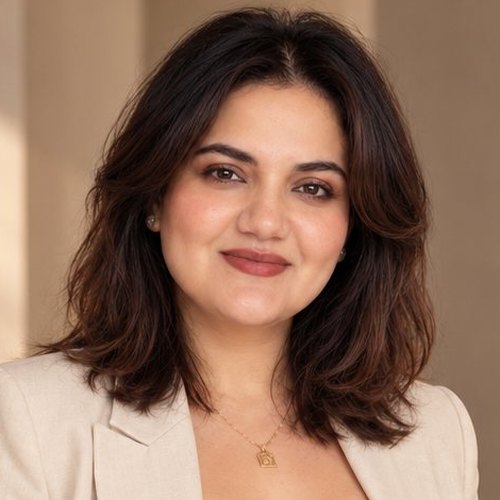
Written by Martina Boshra, founder of iBrand Identity and creator of The Transmutation Method™. Brand strategist for founders and service businesses across the US, Europe and the Gulf.Last updated: September 2026
Strategy-led branding, premium identity, websites and AI-powered content for founders, experts and service businesses.
© 2026 iBrand Identity. All rights reserved. Designed by Martina Boshra.